22 pinball achievements as data, with five rule kinds
· 2 min read · game-dev, pinball, data-driven, javascript, design
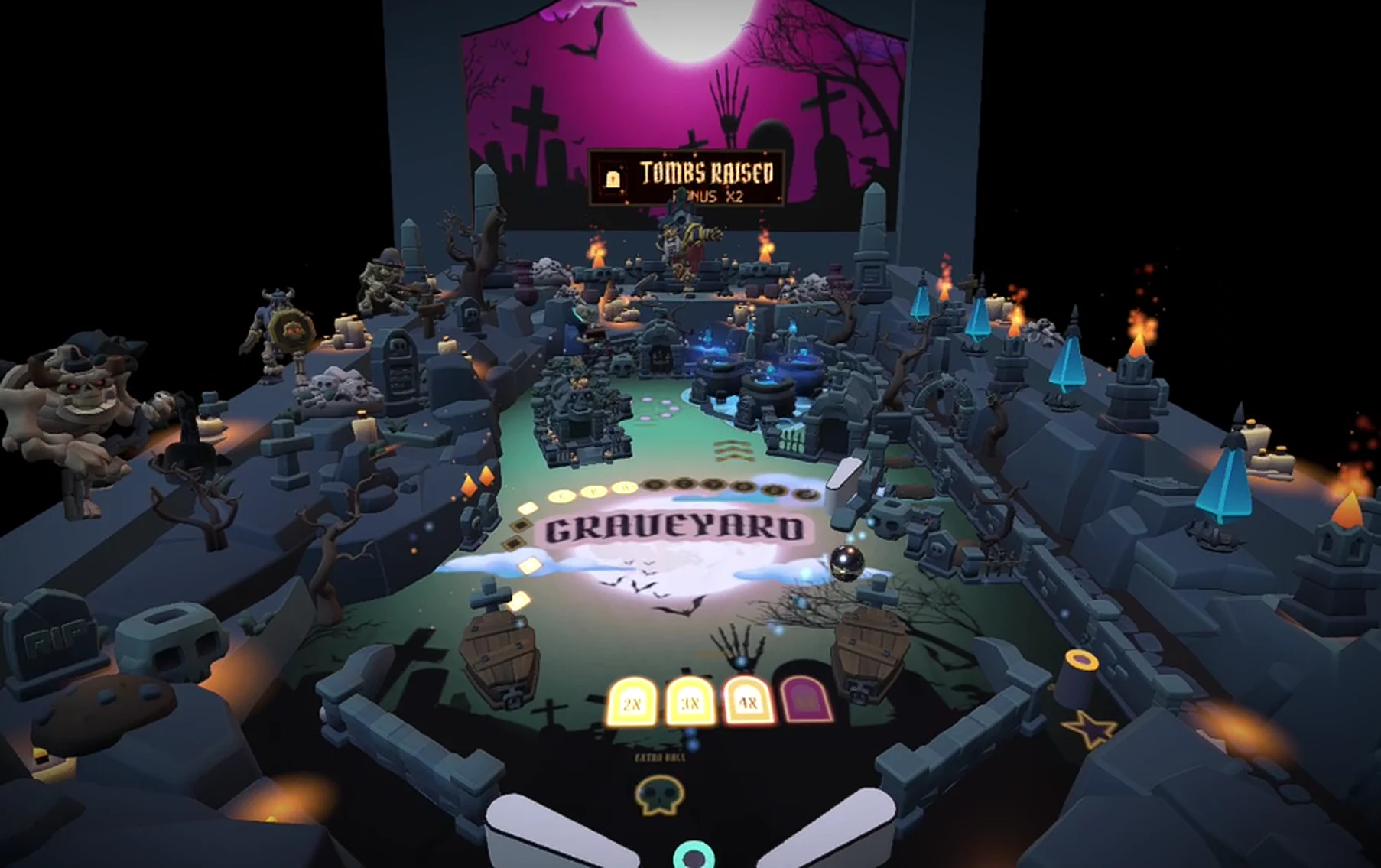
Graveyard Pinball has 22 achievements, and none of them is a line of game code. They are entries in a JSON file read by a small rules engine, and the same engine runs in Node tests.
Five kinds of rule #
count: N hits of something, such as 50 cauldron hits in a game.distinct: N different things from a glob or an explicit set, such as three different lanes lit.stat: a number crosses a line, such as a score of 100,000.event: something happens, optionally with a payload filter, such as a drain where the ball lived under 10 seconds.custom: the few that do not fit, such as a Konami code on the attract screen, a game started after midnight, or every other achievement unlocked.
Three scopes #
A rule counts per ball, per game or for the lifetime, which is persisted. The same kind of rule means different things in different scopes: "Early Grave" is lifetime, "Say Its Name" is per game, and "Nine Lives" is a three-minute ball.
Four tiers #
Common, rare, legendary and secret. The tier decides the palette and how loud the reaction is: common plays only on the display, rare swells the display and chases the lamps, and legendary takes the top of the screen and slows physics to 40%.
Reactions are data too #
Each achievement can carry a react block with the lamps to chase or flash and the actors to animate, using the same names as the table manifest. The engine hands it to a hook, and the 3D side decides what to do with it.
Why the camera is not hijacked #
The lens is 70 degrees and every play view looks down at the table, so the backbox is out of frame in all of them. Flying the camera away mid-ball would also lose the ball. So a "cinematic" is the display swelling toward the middle of the screen plus slow motion.
The display itself is in the DMD post. The project is on its project page.
Related projects
- Graveyard Pinball — Free Halloween game